CLIMATE RESILIENT TOMATO PRODUCTION USING PROTECTED CULTIVATION AND SMART GREENHOUSE TECHNOLOGIES
Keywords:
climate-resilient tomato, protected cultivation, smart greenhouse, IoT sensors, AI decision support, precision horticulture, Tuta absoluta, microclimate control, water-use efficiency, yield stabilityAbstract
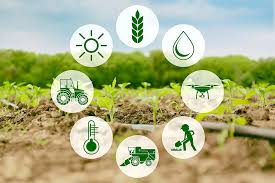
Tomato (Solanum lycopersicum) production faces escalating threats from climate change rising temperatures, heat waves, erratic rainfall, prolonged droughts, increased pest pressure (notably Tuta absoluta), and shifting disease dynamics that compromise yield stability, quality, and economic viability in open-field systems. This review examines climate-resilient tomato cultivation through protected environments (low-cost high tunnels, net houses, polyhouses) and smart greenhouse technologies integrated with IoT sensors, AI-driven decision support, and precision control systems. Protected structures moderate microclimates (temperature 2–8 °C below ambient, relative humidity stabilization, UV filtering), extend growing seasons, reduce pesticide reliance by 40–70%, and achieve yield increases of 50–150% compared with open-field cultivation in heat-prone regions. Advanced smart systems employ real-time monitoring of soil moisture, canopy temperature, VPD, CO₂, and light via wireless sensor networks, coupled with predictive models (hybrid CNN-LSTM, fine-tuned LLMs) for automated irrigation, fertigation, ventilation, shading, and pest early warning. Case studies from tropical/subtropical zones demonstrate water savings of 30–60%, energy-efficient climate control, and enhanced fruit quality (higher TSS, firmness, lycopene). Challenges include high initial capital costs, energy demands in off-grid areas, and farmer training gaps, addressed through low-cost retrofits, solar-powered automation, and public-private extension models. The convergence of protected cultivation with smart technologies offers a scalable pathway to climate-proof tomato production, ensuring food security, income stability, and reduced environmental footprint amid accelerating global warming.